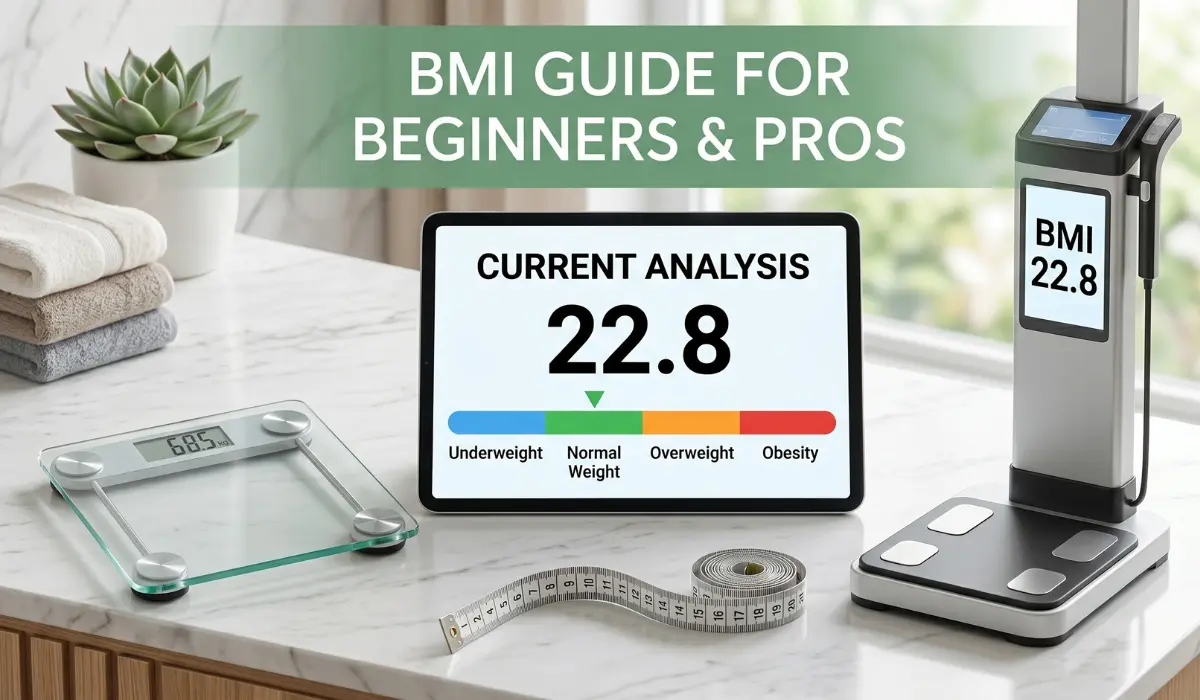
Body Mass Index, or BMI, is perhaps the most widely used screening tool in the world of health and fitness. Despite its simplicity, it remains a cornerstone of clinical health assessments. Whether you are just starting your fitness journey or you are an advanced athlete looking to optimize performance, understanding the nuances of BMI is essential.
What Exactly is BMI?
At its core, BMI is a mathematical formula that compares an individual's weight to their height. It doesn't measure body fat directly, but research has shown that BMI correlates moderately with more direct measures of body fat. Furthermore, BMI is an inexpensive and easy-to-perform method of screening for weight categories that may lead to health problems.
Metric: weight (kg) / [height (m)]²
Interpreting Your Results
For most adults, BMI is used to place them into one of four categories:
| BMI Range | Category |
|---|---|
| Below 18.5 | Underweight |
| 18.5 – 24.9 | Normal weight |
| 25.0 – 29.9 | Overweight |
| 30.0 and Above | Obese |
1. The Underweight Range
Falling below 18.5 can indicate malnutrition, underlying health issues, or a high metabolism. For beginners, this is a signal to focus on nutrient-dense calorie surpluses and strength training to build lean muscle mass.
2. The Healthy Range
A BMI between 18.5 and 24.9 is considered "ideal" for the average person. In this range, the risk of chronic diseases like Type 2 diabetes and hypertension is statistically at its lowest.
3. Overweight and Obese Ranges
When BMI exceeds 25, the heart and joints begin to experience increased stress. For advanced learners, it is important to distinguish between "overweight due to fat" and "overweight due to muscle," which we will discuss below.
Advanced Concept: The Limitations of BMI
While BMI is a great starting point, advanced learners must understand where the tool falls short. Because BMI only uses height and weight, it makes one major assumption: that your weight is distributed normally between bone, muscle, and fat.
The "Athlete Paradox"
Bodybuilders and high-performance athletes often have a "High BMI" (sometimes in the Obese range) despite having very low body fat percentages. This is because muscle is much denser than fat. If you are an advanced weightlifter, your BMI may not be an accurate reflection of your health.
The "Skinny Fat" Phenomenon
Conversely, some elderly individuals or sedentary people may have a "Normal BMI" but possess dangerously high levels of visceral fat (fat around the organs). This is often referred to as Normal Weight Obesity.
Why You Should Still Use It
If BMI has limitations, why do we use it? Because for 90% of the population, it is highly accurate. It serves as a preliminary indicator. If your BMI is high, it’s a prompt to look deeper into other metrics like waist-to-hip ratio, body fat percentage, and blood pressure.
Actionable Steps Based on Your BMI
- If High: Incorporate more cardiovascular exercise and track your TDEE (Total Daily Energy Expenditure) to ensure a caloric deficit.
- If Low: Focus on protein intake (1.6g to 2.2g per kg of body weight) and progressive overload in the gym.
- If Normal: Focus on "Body Recomposition" maintaining weight while losing fat and gaining muscle simultaneously.
Conclusion
BMI is a vital tool in your health toolkit, but it shouldn't be the only tool. Use our FitMeter Calculator to find your number today, and then use that data to make informed choices about your nutrition and activity levels. Remember, health is a marathon, not a sprint.