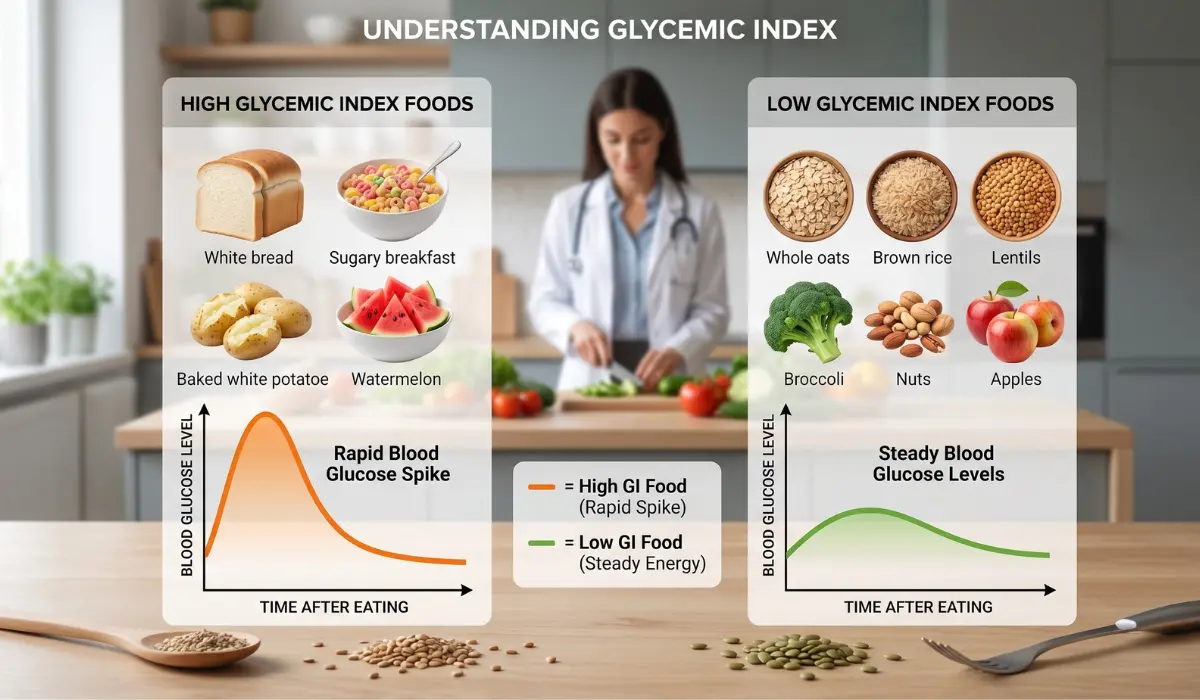
In our previous guide on Macronutrients, we learned that carbohydrates are the body's preferred fuel source. However, not all carbs are created equal. Some give you a quick burst of energy followed by a "crash," while others provide a slow, steady burn. The Glycemic Index (GI) is the tool we use to measure this difference.
What is the Glycemic Index?
The Glycemic Index is a rating system for foods containing carbohydrates. It shows how quickly each food affects your blood sugar (glucose) level when that food is eaten on its own. The scale runs from 0 to 100, with pure glucose serving as the reference point at 100.
Why Does the GI Matter?
When you eat a high-GI food, your blood sugar spikes rapidly. In response, your pancreas releases a large amount of insulin to move that sugar into your cells. This often leads to a rapid drop in blood sugar, which can leave you feeling tired, irritable, and most importantly hungry again very quickly.
By choosing low-GI foods, you encourage a "slow-release" of energy. This keeps your insulin levels stable, which is highly beneficial for fat loss and long-term metabolic health.
The Benefits of a Low-GI Diet:
- Weight Management: Staying full longer makes sticking to your caloric deficit much easier.
- Stable Energy: No more "afternoon slumps" after lunch.
- Long-term health: Higher-fibre, minimally processed carbohydrate choices can be one part of an overall healthy eating pattern.
Common Foods and Their GI Scores
| Low GI (Best) | Medium GI | High GI (Limit) |
|---|---|---|
| Oats, Lentils | Basmati Rice | White Bread |
| Apples, Berries | Sweet Corn | Watermelon |
| Non-starchy Veggies | Bananas | Boiled Potatoes |
Glycemic Index vs. Glycemic Load
Advanced learners should also understand Glycemic Load (GL). While GI tells you how fast the sugar rises, GL tells you how much carbohydrate is actually in a serving. For example, watermelon has a high GI, but because it is mostly water, its Glycemic Load is actually quite low. It’s always best to look at both!
Practical Tips for Using GI
- Mix and Match: If you eat a high-GI food (like white rice), pair it with a low-GI food (like fiber-rich vegetables) to slow down the overall digestion.
- Focus on Fiber: High-fiber foods almost always have a lower GI because fiber slows down the absorption of sugar.
- Watch the Ripeness: A very ripe banana has a higher GI than a slightly green one!
Conclusion
The Glycemic Index is a powerful way to "hack" your hunger and energy levels. By focusing on low-GI, whole foods, you can ensure that the calories you calculate on the FitMeter Home Page are working for you, not against you. High-quality fuel leads to high-quality results.