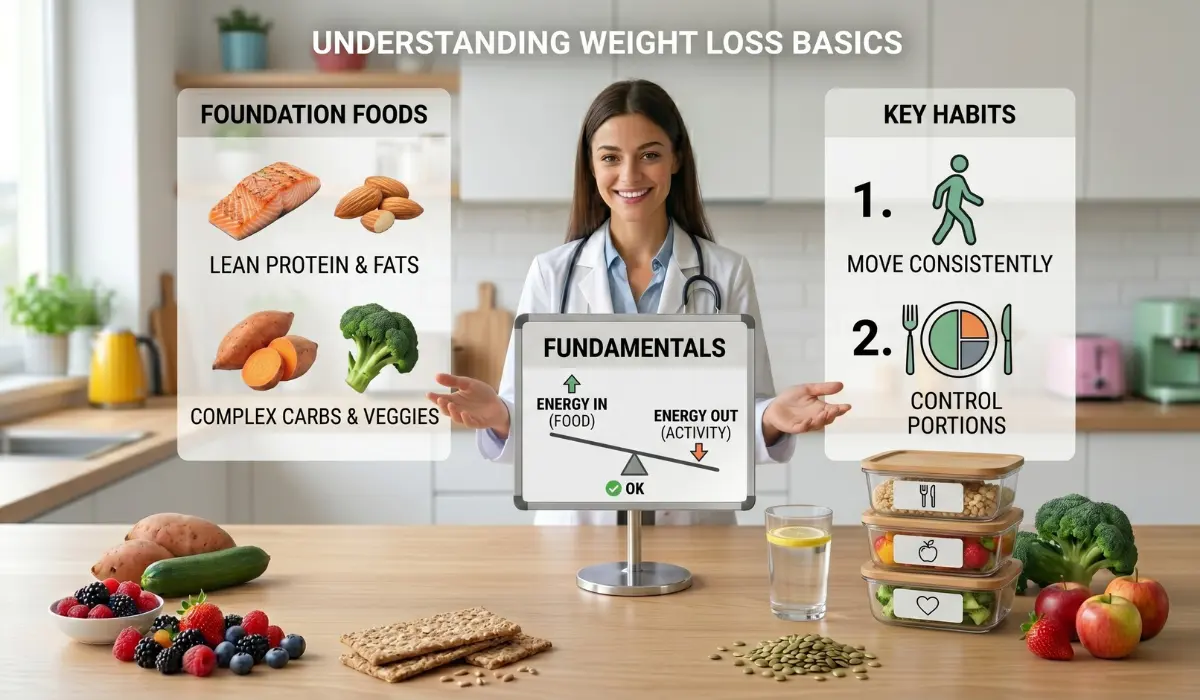
Weight loss is often treated like a complicated puzzle, but the reality is much simpler. At FitMeter, we believe that when you understand the "Why" behind weight loss, the "How" becomes much easier to manage. This guide breaks down the core pillars of shedding body fat while maintaining your health and energy.
The Golden Rule: The Caloric Deficit
You cannot bypass the laws of thermodynamics. To lose weight, your body must be in a caloric deficit. This means you are consuming fewer calories than your body burns for energy throughout the day.
When you are in a deficit, your body looks for alternative energy sources. It turns to its "backup batteries" which is stored body fat. By burning this fat for fuel, you begin to lose weight. It’s not about "magic foods"; it’s about energy balance.
The Truth: While reducing processed sugar is healthy, you can lose weight eating any food as long as you are in a caloric deficit. Sustainability is more important than restriction.
Fat Loss vs. Weight Loss
This is a distinction that advanced learners understand deeply. Your "weight" includes water, muscle, bone, and organs. Your goal shouldn't just be to see a lower number on the scale; it should be to lose body fat while keeping your muscle mass.
Why Muscle Matters
As we discussed in our BMR Guide, muscle is metabolically active. If you lose weight too quickly by starving yourself, your body will burn muscle for fuel. This lowers your metabolism, making it easier to gain the weight back later. To prevent this, focus on slow weight loss (0.5kg to 1kg per week) and eat plenty of protein.
The Role of Nutrition
While calories determine how much you weigh, your "macros" (macronutrients) determine how you look and feel.
- Protein: Essential for maintaining muscle and keeping you full.
- Fats: Vital for hormone production and brain health.
- Carbohydrates: Your body's preferred source of high-intensity energy.
A balanced approach that includes all three is usually the most successful strategy for long-term health.
Exercise: The Great Assistant
You don't need to exercise to lose weight, but it makes the process significantly easier and healthier. Exercise does two things:
- It increases your Total Daily Energy Expenditure (TDEE), allowing you to eat a bit more while staying in a deficit.
- Strength training "signals" to your body that it needs to keep its muscle, ensuring that the weight you lose comes primarily from fat stores.
How to Start Today
Don't try to change your entire life overnight. Follow these simple steps:
- Use the FitMeter Calculator to find your maintenance calories.
- Aim for a modest deficit of 300-500 calories per day.
- Prioritize whole foods (vegetables, lean proteins, fruits).
- Drink plenty of water; sometimes hunger is actually thirst in disguise.
- Get 7-8 hours of sleep to keep your hunger hormones in check.
Conclusion
Weight loss isn't a race; it's a lifestyle adjustment. By using tools like FitMeter to track your data and staying consistent with your habits, you can achieve results that last a lifetime. Focus on progress, not perfection.