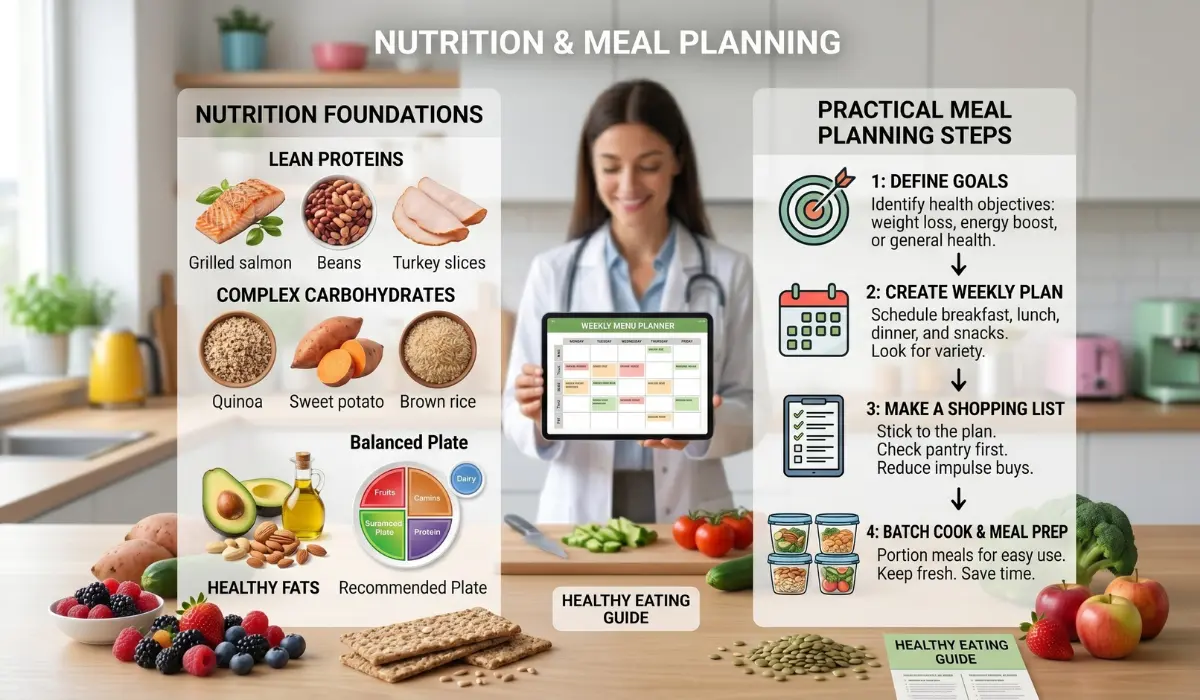
We’ve all been there: It’s 6:00 PM, you’re tired from work, and you have no idea what’s for dinner. This is the moment when most healthy intentions fail. The secret to long-term success isn't willpower but it's planning. Nutrition is the fuel, but meal planning is the map that gets you to your destination.
Why Meal Plan?
Meal planning is simply the act of deciding what you will eat before you are hungry. It offers three massive benefits:
- Consistency: It ensures you hit your daily calorie needs.
- Financial Savings: You stop buying unnecessary groceries and ordering expensive takeout.
- Mental Freedom: You eliminate "decision fatigue" by making your food choices once a week.
The 4-Step Planning Process
Building a Balanced Plate
You don't need a complex spreadsheet to eat well. For most people, a "healthy plate" looks like this:
- 50% Vegetables: High volume, low calorie, lots of fiber.
- 25% Lean Protein: For muscle repair and fullness.
- 25% Complex Carbs: For sustained energy.
- A "Thumb" of Healthy Fat: For hormone health.
A Simple Sample Day
| Meal | Example Choice |
|---|---|
| Breakfast | Oats with protein powder and berries |
| Lunch | Grilled chicken salad with olive oil dressing |
| Snack | A handful of almonds and a piece of fruit |
| Dinner | Baked salmon with roasted sweet potatoes and broccoli |
Common Pitfalls to Avoid
The biggest mistake beginners make is being too restrictive. If you love pasta, don't try to live on steamed chicken and broccoli. Find a way to fit a healthy portion of pasta into your calorie budget. Flexibility is the key to sustainability.
Conclusion
Nutrition and meal planning aren't about being perfect; they are about being prepared. By spending just 30 minutes on a Sunday planning your week, you are investing in your future self. Use the tools on our Home Page to get your targets, and then get into the kitchen and make it happen!